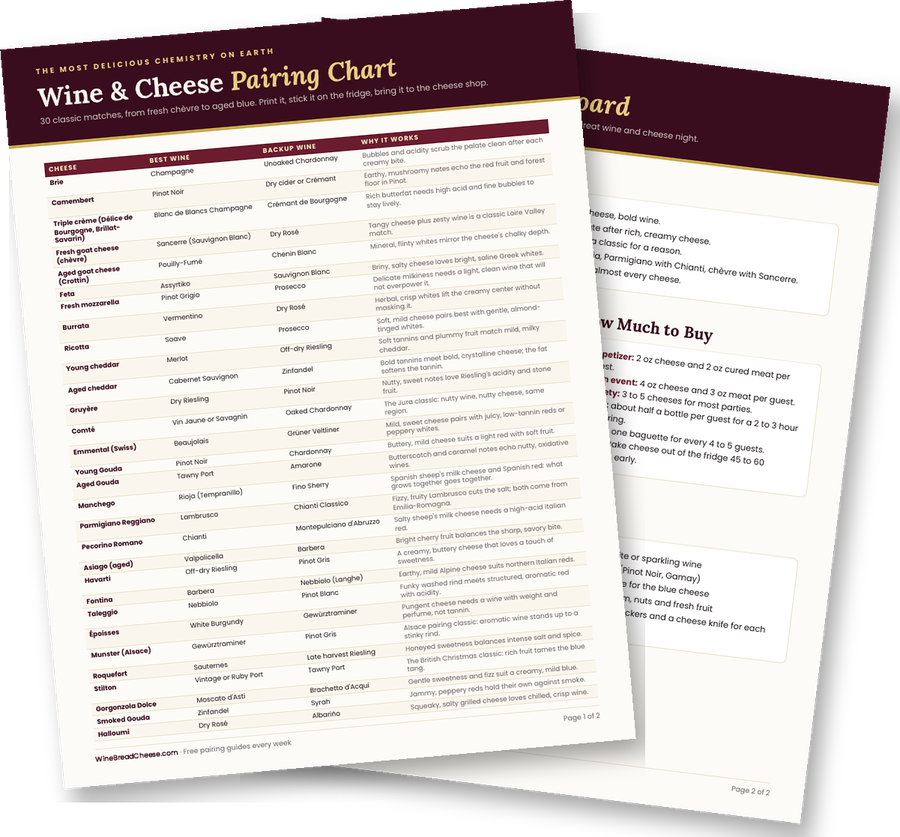
Quick answer: Blue cheese pairs best with sweet wines because sweetness balances its salty, pungent flavor. The classic matches are Roquefort with Sauternes, Stilton with Port, and Gorgonzola with Recioto or Moscato. For dry options, try a bold Zinfandel or a late harvest Riesling.
Blue cheese is bold, salty, creamy, and unforgettable. Some people find it intimidating, but the range is wide, from mild and buttery Gorgonzola Dolce to the powerful, crumbly Cabrales of northern Spain. Once you understand how blue cheese is made and how to pair it, it becomes one of the most rewarding cheeses on any board.
How Blue Cheese Is Made
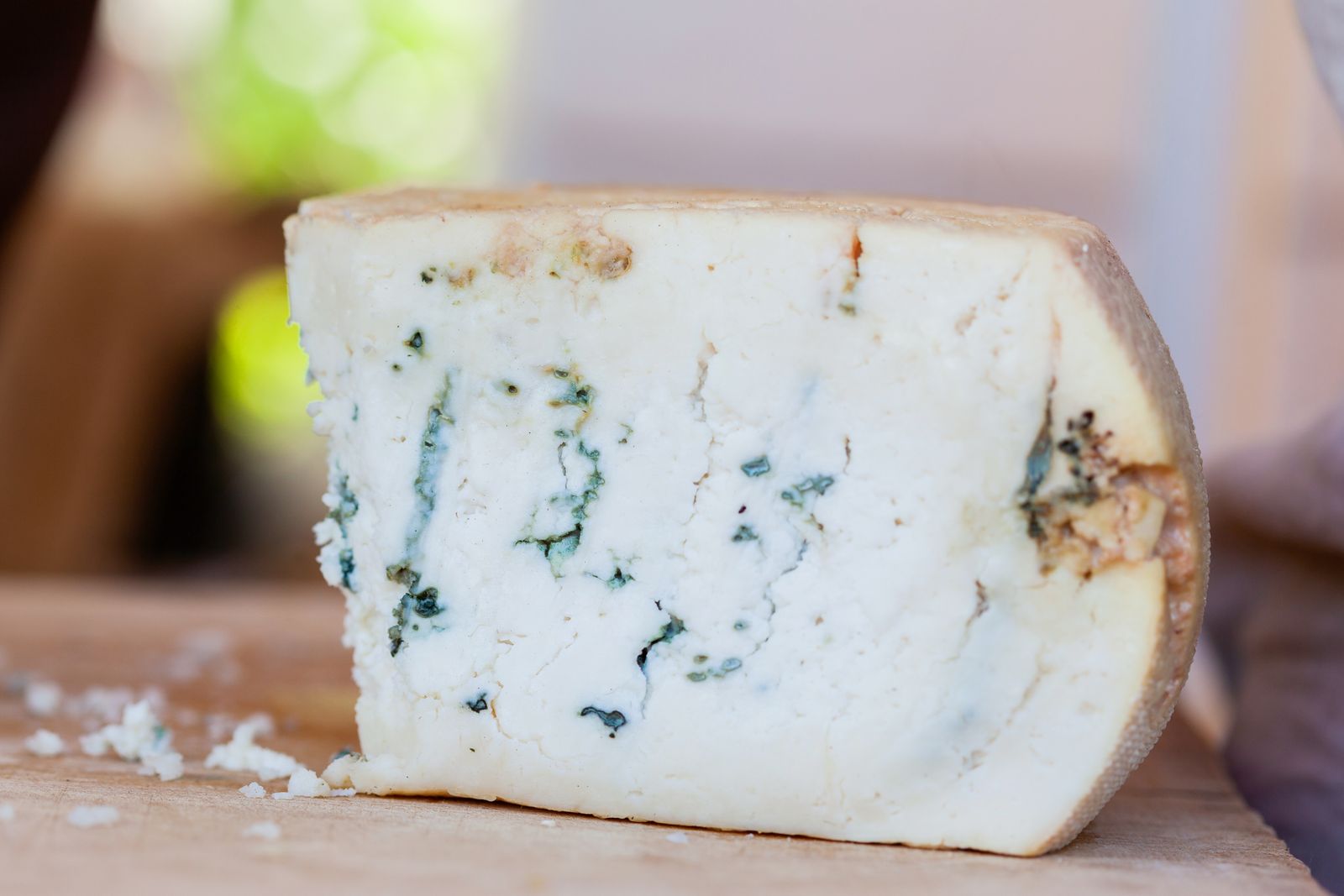
Blue cheese gets its veins from Penicillium roqueforti or Penicillium glaucum, molds that are added to the milk or curds. After the cheese is formed, cheesemakers pierce it with stainless steel needles. This lets oxygen into the interior, and the mold grows along the channels to create the familiar blue green veins. The mold breaks down fats and proteins, producing the cheese’s spicy, savory, and sometimes peppery flavor.
Types of Blue Cheese
Roquefort (France)
Made from raw sheep’s milk and aged in the natural caves of Roquefort sur Soulzon, Roquefort is tangy, salty, and creamy with a sharp finish. It is one of the oldest named cheeses in the world.
Stilton (England)
Blue Stilton is made from cow’s milk in Derbyshire, Leicestershire, and Nottinghamshire. It is rich and crumbly with a mellow, nutty flavor that becomes deeper with age.
Gorgonzola (Italy)
Gorgonzola comes in two styles. Gorgonzola Dolce is soft, spoonable, and mild. Gorgonzola Piccante (or Naturale) is firmer, aged longer, and much sharper.
Cabrales (Spain)
From the mountains of Asturias, Cabrales is often made from a blend of cow, goat, and sheep’s milk and aged in limestone caves. It is one of the most intense blue cheeses in the world.
Danish Blue
Danablu is creamy, salty, and sharp, a widely available everyday blue that works well in dressings and on burgers.
American Blues
American cheesemakers produce outstanding blues such as Point Reyes Original Blue, Rogue River Blue, and Maytag Blue, ranging from creamy and sweet to bold and earthy.
The Best Wine Pairings for Blue Cheese
Sweet Wines
Salt and sugar are a perfect balance. These are the most celebrated blue cheese pairings.
- Roquefort and Sauternes: honeyed, botrytized sweet wine from Bordeaux. A legendary match.
- Stilton and Port: ruby or tawny Port, especially at Christmas.
- Gorgonzola and Recioto della Valpolicella or Moscato d’Asti: sweet Italian partners for an Italian cheese.
- Cabrales and Pedro Ximénez Sherry: rich, raisiny sweetness against intense blue.
- Any blue with late harvest Riesling or Tokaji: high acidity keeps the sweetness fresh.
Dry Wines
If you prefer dry wine, pick something bold and fruity. Ripe Zinfandel, Amarone, and Shiraz have enough fruit and power to stand up to blue cheese. Avoid light, delicate wines, which will taste thin and sour.
What to Serve With Blue Cheese
- Honey or honeycomb: echoes sweet wine pairings
- Pears, figs, and grapes: fresh sweetness and juiciness
- Walnuts and candied pecans: crunch and earthy depth
- Dark breads: rye, pumpernickel, and walnut breads stand up to blue cheese. See our cheese board bread guide.
- Dark chocolate: a surprising, delicious match with Port and Stilton
How to Serve and Store Blue Cheese
Serve blue cheese at room temperature, after about 45 minutes out of the refrigerator, and place it last in your tasting order so it does not overpower milder cheeses. Wrap leftovers in foil or cheese paper, which keeps blue cheese moist while preventing its aroma from spreading. Find more tips in our cheese storage guide.
Frequently Asked Questions
What wine goes best with blue cheese?
Sweet wines are the best match. Try Sauternes with Roquefort, Port with Stilton, and Moscato d’Asti or Recioto with Gorgonzola. Bold reds like Zinfandel work if you prefer dry wine.
Is the mold in blue cheese safe to eat?
Yes. The blue veins are made by food safe Penicillium molds added during cheesemaking. However, fuzzy or unusual mold growing on the surface of cheese past its prime should be cut away or discarded.
What is the mildest blue cheese?
Gorgonzola Dolce, Cambozola, and many creamy Danish style blues are among the mildest. They are a great introduction for people new to blue cheese.
Does red wine go with blue cheese?
Bold, fruity red wines like Zinfandel, Amarone, and Shiraz can pair with blue cheese. Light or highly tannic reds often taste bitter or thin against its intensity.