Quick answer: Wrap cheese in cheese paper, wax paper, or parchment, then loosely in a bag, and store it in the vegetable drawer of your refrigerator. Avoid tight plastic wrap, which traps moisture and makes cheese taste like plastic. Hard cheeses last 3 to 6 weeks once opened, semi soft cheeses 1 to 2 weeks, and soft fresh cheeses about 5 to 7 days.
Cheese is a living food. It keeps ripening, breathing, and changing after you bring it home. Store it the wrong way and it dries out, gets moldy, or picks up odd flavors from the refrigerator. Store it the right way and a good wedge can last weeks. Here is how.
The Golden Rule: Let Cheese Breathe
Cheese needs a little air and a little humidity. Tight plastic wrap suffocates cheese and traps moisture, which encourages mold and creates a plasticky taste. Open air dries it out. The ideal wrap lets moisture escape slowly while protecting the surface.
The Best Ways to Wrap Cheese
- Cheese paper: a two layer paper (wax coated on the inside, porous on the outside) designed for cheese. The best option.
- Wax or parchment paper plus a bag: wrap the cheese snugly in paper, then place it in a loosely sealed zip top bag or container. Nearly as good as cheese paper.
- Beeswax wraps: reusable and breathable, good for hard and semi firm cheeses.
- Plastic wrap: only for short term storage, and rewrap with fresh plastic each time you open it.
Label each package with the cheese name and the date you opened it.
How to Store Cheese by Type
Hard Cheeses
Parmigiano Reggiano, aged Gouda, Pecorino, and aged Cheddar have low moisture and last longest. Wrap them in paper and store them in the vegetable drawer. They keep 3 to 6 weeks after opening, sometimes longer. If a small spot of mold appears, cut off at least an inch around and below it and the rest is safe to eat.
Semi Firm Cheeses
Gruyère, Comté, Manchego, young Cheddar, and Gouda keep 2 to 4 weeks in paper. Rewrap in fresh paper every few days if the surface looks damp.
Soft and Bloomy Cheeses
Brie, Camembert, and triple crèmes last about 1 to 2 weeks after cutting. Store them in their original box or wrapped in paper inside a container. Press a piece of parchment against the cut surface to keep it from drying. Read our Brie pairing guide for serving ideas.
Fresh Cheeses
Mozzarella, burrata, ricotta, and fresh goat cheese are highly perishable. Keep them in their original liquid or container and eat them within about 5 to 7 days of opening. Burrata is best eaten within a day or two.
Blue Cheeses
Wrap blue cheese in foil or cheese paper to keep it moist and contain its strong aroma. It lasts 3 to 4 weeks. Keep it away from other cheeses so the mold does not spread. Learn more in our blue cheese guide.
Washed Rind Cheeses
Taleggio, Époisses, and other pungent cheeses should be wrapped in paper and stored in a sealed container to keep the smell contained. Eat within 1 to 2 weeks.
Where to Store Cheese in the Refrigerator
The vegetable or cheese drawer is the best spot because it is slightly warmer and more humid than the main shelves. The ideal temperature for cheese storage is about 35 to 45°F. Avoid the door, where temperature changes every time you open it.
Can You Freeze Cheese?
Yes, but texture suffers. Freezing works best for hard and semi firm cheeses that you plan to shred, grate, or cook with, such as Cheddar, mozzarella for pizza, and Parmigiano. Grate before freezing, store in an airtight bag for up to 6 months, and thaw in the refrigerator. Avoid freezing soft cheeses, fine aged cheeses, and fresh cheeses, which become crumbly or watery.
How to Tell If Cheese Has Gone Bad
- Fresh and soft cheeses: discard if you see any mold that is not part of the cheese, or if they smell sour or ammoniated.
- Hard cheeses: small surface mold can be cut away generously; discard if mold is widespread.
- Any cheese: a strong ammonia smell, slimy texture, or off color is a sign to throw it out.
When in doubt, throw it out.
Bring Cheese to Room Temperature Before Serving
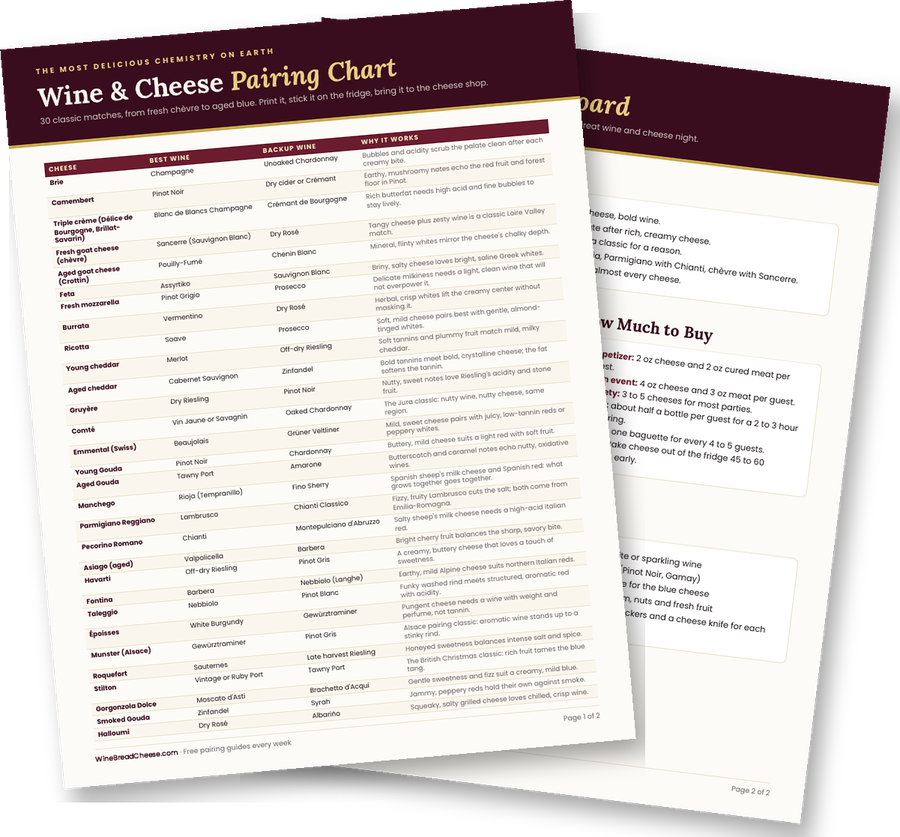
Cold cheese tastes muted. Take cheese out 30 to 60 minutes before serving, and keep it wrapped until you are ready to plate it so the surface does not dry out. Then build your board with our charcuterie guide and pair it using our wine and cheese rules.
Frequently Asked Questions
What is the best way to store cheese in the fridge?
Wrap cheese in cheese paper, wax paper, or parchment, then place it loosely in a bag or container in the vegetable drawer.
How long does cheese last after opening?
Hard cheeses last 3 to 6 weeks, semi firm cheeses 2 to 4 weeks, soft cheeses 1 to 2 weeks, and fresh cheeses about 5 to 7 days.
Is it bad to store cheese in plastic wrap?
Plastic wrap traps moisture and can make cheese taste like plastic. It is fine for a day or two, but paper is far better for longer storage.
Can you freeze cheese?
Hard and semi firm cheeses for cooking can be frozen for up to 6 months, ideally grated. Soft and fresh cheeses do not freeze well.