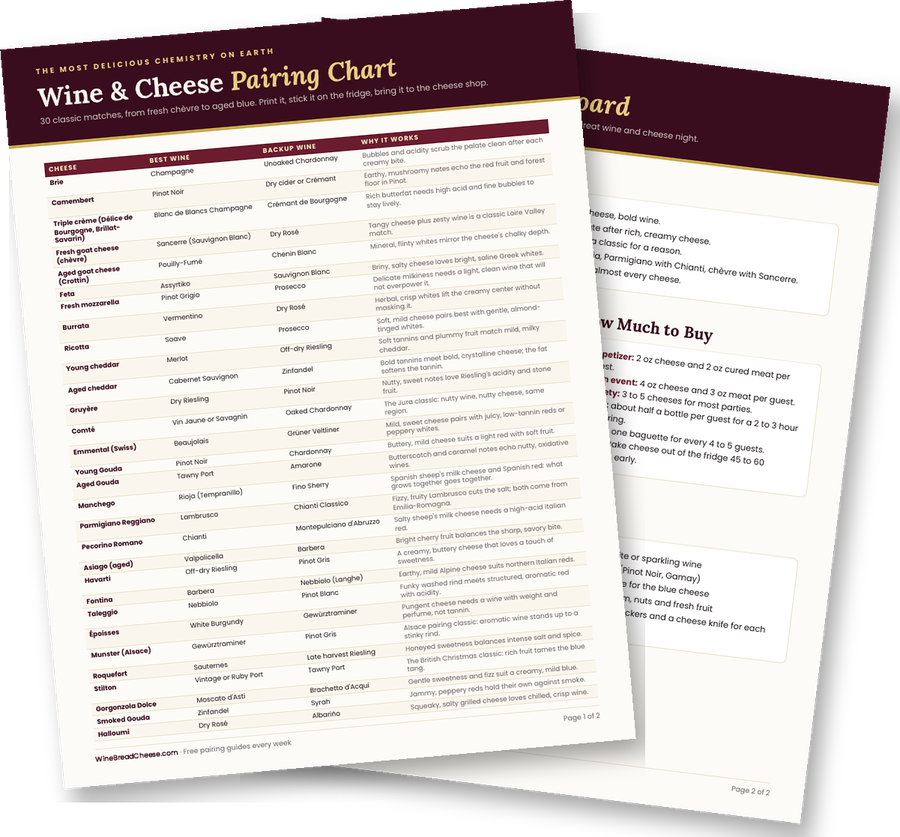
Quick answer: Most cheeses fall into seven families: fresh, bloomy rind, washed rind, semi soft, semi firm, hard, and blue. Each family has a typical texture and flavor, and knowing them makes it easy to build a cheese board and choose a wine.
There are well over a thousand named cheeses in the world, which can make a cheese counter feel overwhelming. The good news is that most cheeses fit into a handful of families based on how they are made and aged. Learn these seven and you can confidently shop, serve, and pair almost any cheese.
1. Fresh Cheese
Fresh cheeses are unaged or aged only a few days. They are soft, moist, mild, and milky with a clean, tangy flavor.
- Examples: mozzarella, burrata, ricotta, fresh goat cheese (chèvre), feta, cottage cheese, mascarpone
- Flavor: milky, lemony, mild
- Wine pairing: crisp whites like Sauvignon Blanc, Pinot Grigio, Assyrtiko, and dry rosé
2. Bloomy Rind Cheese
These cheeses develop a soft, white, velvety rind from Penicillium candidum mold. They ripen from the outside in, becoming creamy and gooey.
- Examples: Brie, Camembert, Brillat Savarin, Humboldt Fog, Saint André
- Flavor: buttery, mushroomy, rich
- Wine pairing: Champagne, Chardonnay, Pinot Noir. See our Brie pairing guide.
3. Washed Rind Cheese
During aging, these cheeses are washed with brine, beer, wine, or brandy, which encourages orange, sticky rinds and a famously strong aroma. The flavor is often milder than the smell.
- Examples: Taleggio, Époisses, Limburger, Munster (Alsace), Raclette
- Flavor: meaty, savory, funky
- Wine pairing: Gewürztraminer, off dry Riesling, Pinot Gris, Belgian style beers
4. Semi Soft Cheese
Smooth, sliceable, and mild, semi soft cheeses are great for melting and snacking.
- Examples: Havarti, Fontina, Monterey Jack, young Gouda, Port Salut
- Flavor: buttery, mellow, slightly sweet
- Wine pairing: Chardonnay, Pinot Noir, Beaujolais, dry Riesling
5. Semi Firm Cheese
These cheeses are pressed and aged several months, giving them a firm but supple texture and more complex, nutty flavor.
- Examples: Gruyère, Comté, Manchego, Emmental, young Cheddar
- Flavor: nutty, sweet, savory
- Wine pairing: Chardonnay, Pinot Noir, Tempranillo, dry Sherry
6. Hard Cheese
Aged for many months or years, hard cheeses lose moisture and concentrate their flavor. Many develop crunchy protein crystals (tyrosine and calcium lactate).
- Examples: Parmigiano Reggiano, Grana Padano, aged Gouda, Pecorino Romano, aged Cheddar, Mimolette
- Flavor: salty, savory, caramel, nutty
- Wine pairing: Cabernet Sauvignon, Barolo, Chianti Classico, Lambrusco, tawny Port. See our wine with steak guide for bold reds that also suit aged cheese.
7. Blue Cheese
Blue cheeses are pierced during aging to allow blue green Penicillium roqueforti mold to grow inside.
- Examples: Roquefort, Stilton, Gorgonzola, Cabrales, Danish Blue
- Flavor: salty, spicy, pungent, creamy
- Wine pairing: sweet wines like Sauternes and Port. Read our full blue cheese guide.
Cheese by Milk Type
- Cow’s milk: buttery and mild to rich (Brie, Cheddar, Gruyère, Parmigiano)
- Goat’s milk: tangy, bright, and earthy (chèvre, Crottin, Garrotxa)
- Sheep’s milk: rich, nutty, and sweet (Manchego, Roquefort, Pecorino)
- Buffalo milk: creamy and fresh (mozzarella di bufala)
How to Use Cheese Families to Build a Board
Pick one cheese from three or four different families for variety in texture and flavor. A classic combination is a bloomy rind, a semi firm, a hard, and a blue. Then follow our charcuterie board guide and wine and cheese pairing rules.
Frequently Asked Questions
What are the main types of cheese?
The main cheese families are fresh, bloomy rind, washed rind, semi soft, semi firm, hard, and blue.
What is the difference between hard and soft cheese?
Hard cheeses are aged longer and contain less moisture, which gives them a firm texture and concentrated flavor. Soft cheeses are younger, moister, and milder.
What are the crunchy crystals in aged cheese?
They are usually tyrosine or calcium lactate crystals, which form naturally as cheese ages. They are harmless and a sign of a well aged cheese.
Which type of cheese is best for beginners?
Mild semi soft and semi firm cheeses like Havarti, young Gouda, Gruyère, and Manchego are approachable for beginners, along with mild Brie.