Quick answer: To taste wine at home, pour about 2 ounces into a clean glass, then follow the five S’s: see, swirl, sniff, sip, and savor. Compare two to four wines side by side, take notes, and serve cheese and bread between wines to reset your palate.
You do not need a fancy cellar or a sommelier certificate to taste wine like a professional. Hosting a wine tasting at home is one of the best ways to learn what you like and why, and it makes a great evening with friends. Here is everything you need to get started.
What You Need for a Home Wine Tasting
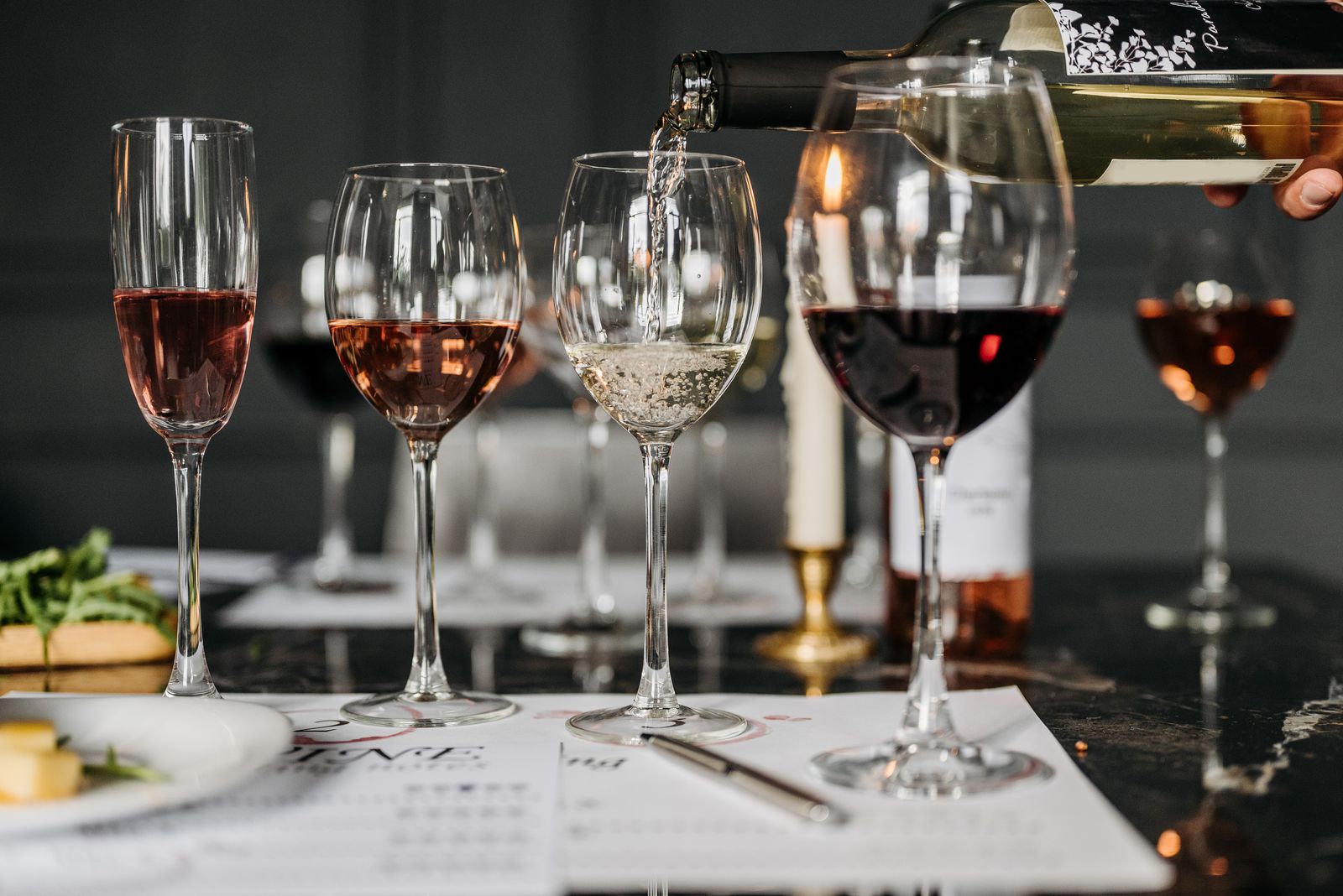
- Glasses: a clear, stemmed glass with a bowl that narrows at the top. One all purpose glass per person is fine.
- Wines: two to four bottles chosen around a theme
- Water: for drinking and rinsing glasses
- Spit cup or dump bucket: optional, but helpful if you are tasting many wines
- Neutral snacks: plain crackers or baguette to cleanse the palate
- Paper and pens: for tasting notes
- A white surface: a napkin or tablecloth makes it easier to judge color
The Five S’s of Wine Tasting
1. See
Tilt the glass against a white background. Look at the color and its depth. White wines range from pale straw to deep gold and generally deepen with age or oak. Reds range from purple to ruby to brick and generally lighten and turn more orange with age.
2. Swirl
Swirl the wine gently in the glass. This adds oxygen and releases aromas. Watch the “legs” or “tears” that run down the side; thicker legs usually indicate higher alcohol or sugar, not higher quality.
3. Sniff
Put your nose into the glass and take a few short sniffs. Aroma is where most of a wine’s character lives. Ask yourself: is it fruity, floral, earthy, spicy, or oaky? Is the fruit fresh, ripe, or dried?
4. Sip
Take a small sip and let it coat your mouth. Notice the five main structural elements:
- Sweetness: dry, off dry, or sweet
- Acidity: does it make your mouth water?
- Tannin: does it dry your gums like strong tea? (mostly red wines)
- Alcohol: a warming sensation at the back of the throat
- Body: does it feel light like skim milk or heavy like cream?
5. Savor
After you swallow or spit, notice how long the flavor lasts. This is called the finish. A long, pleasant finish is a sign of a well made wine.
How to Set Up a Tasting Flight
Comparing wines side by side is the fastest way to learn. Choose a theme so the differences are clear.
- Same grape, different places: Chardonnay from Burgundy, California, and Australia
- Same place, different grapes: Sauvignon Blanc, Chardonnay, and Pinot Noir from New Zealand
- Old World vs. New World: French Pinot Noir and Oregon Pinot Noir
- Price test: a $15 bottle and a $50 bottle of the same grape, tasted blind
Taste in this order: sparkling, light whites, full whites, rosé, light reds, full reds, then sweet wines.
Serving Temperatures
- Sparkling and sweet wines: 40 to 50°F
- Light whites and rosé: 45 to 50°F
- Full bodied whites: 50 to 55°F
- Light reds: 55 to 60°F
- Full bodied reds: 60 to 65°F
A simple rule: take whites out of the refrigerator 20 minutes before serving and put reds in the refrigerator for 15 minutes.
How to Describe Wine
Start simple. Name a fruit, a texture, and one other impression, for example: “lemony, light, and a little salty,” or “black cherry, smooth, with a hint of vanilla.” Over time you will build a vocabulary. There are no wrong answers; your palate is your own.
Add Cheese and Bread
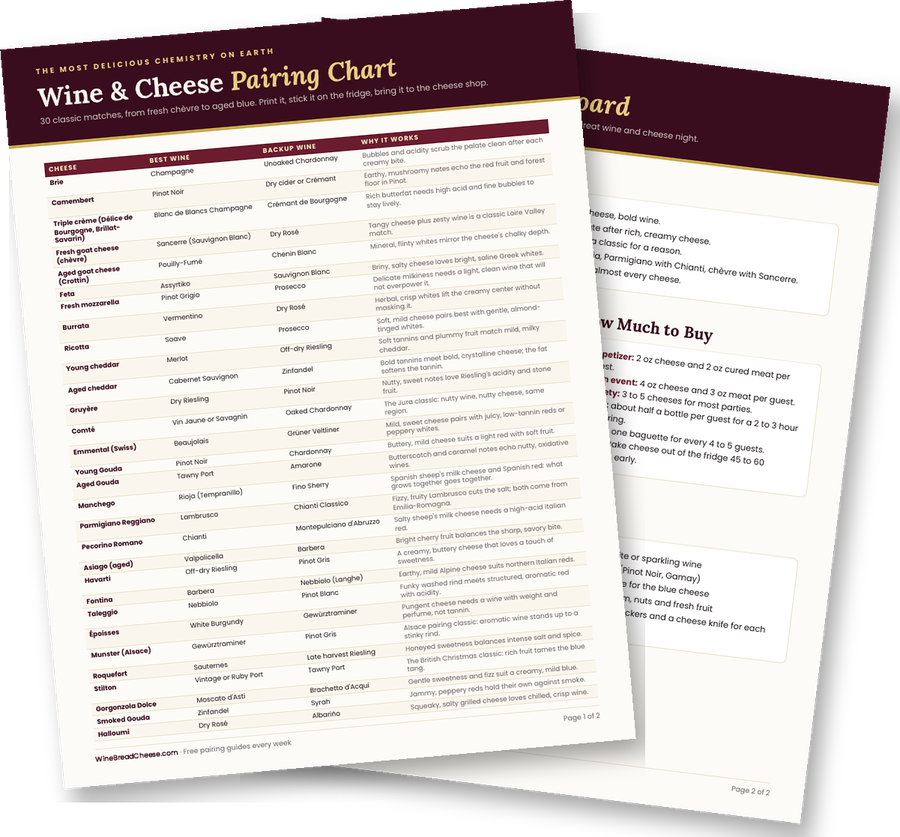
A tasting becomes a party when you add food. Choose cheeses that suit your wines using our wine and cheese pairing rules, and offer a neutral baguette or sourdough to cleanse the palate. For a bigger spread, follow our charcuterie board guide.
Frequently Asked Questions
How much wine should I pour for a tasting?
Pour about 2 ounces per wine per person. A 750 ml bottle provides roughly 12 tasting pours.
How many wines should I taste at home?
Three to six wines is ideal for a home tasting. More than that can tire your palate.
What order should I taste wines in?
Taste from lightest to heaviest and dry to sweet: sparkling, light whites, full whites, rosé, light reds, full reds, and finally dessert wines.
Do I need special glasses for wine tasting?
No. A clear, stemmed glass with a bowl that narrows at the rim works for every wine. It helps concentrate aromas and makes swirling easy.