Quick answer: Match the intensity of the wine to the intensity of the cheese, use high acid wines to cut through rich and creamy cheeses, pair salty or blue cheeses with sweet wines, and when in doubt choose a wine and cheese from the same region.
Wine and cheese are one of the oldest food pairings in the world, and for good reason. Both are fermented, both express the place they come from, and both change dramatically with age. You do not need a sommelier certificate to pair them well. These seven rules will get you a great match nearly every time, whether you are setting out a weeknight snack or a full cheese and charcuterie board.
1. Match Intensity
Delicate cheeses need delicate wines. Bold cheeses need bold wines. A fresh mozzarella will be overwhelmed by a big Cabernet Sauvignon, while an aged Gouda will make a light Pinot Grigio taste like water. Start by asking how strong the cheese tastes, then pick a wine of similar weight.
- Mild and fresh (mozzarella, burrata, ricotta, fresh goat cheese): crisp whites like Pinot Grigio, Sauvignon Blanc, or dry rosé
- Medium (young Gouda, Havarti, Fontina, Gruyère): Chardonnay, Pinot Noir, Beaujolais
- Bold and aged (aged Cheddar, Parmigiano Reggiano, aged Gouda): Cabernet Sauvignon, Barolo, Rioja Reserva, Zinfandel
2. Acid Loves Fat
High acid wines such as Sauvignon Blanc, Champagne, and Chablis act like a squeeze of lemon on rich food. They cut through butterfat and refresh your palate between bites. This is why sparkling wine is such a reliable partner for creamy triple crème cheeses like Brie and Camembert. The bubbles and acidity scrub the palate clean so the next bite tastes as good as the first.
3. Salty Loves Sweet
Salt and sugar balance each other. Salty blue cheeses like Roquefort and Stilton are famous with sweet wines such as Sauternes and Port. The sweetness softens the salt and the salt keeps the sweetness from feeling cloying. Our blue cheese guide covers this classic contrast in detail.
4. What Grows Together Goes Together
When in doubt, pair a cheese and wine from the same region. Generations of cooks have already done the testing for you.
- Loire Valley goat cheese (Crottin de Chavignol) with Sancerre
- Parmigiano Reggiano with Lambrusco
- Manchego with Tempranillo from Rioja
- Comté with Vin Jaune or Chardonnay from the Jura
- Pecorino Toscano with Chianti
5. Be Careful With Tannin
Tannin is the drying, grippy sensation in red wine. It comes from grape skins and seeds and from oak barrels. Tannic reds can clash with soft, creamy cheeses and taste metallic or bitter. Save your Cabernet and Nebbiolo for hard, aged cheeses, where the fat and crystalline proteins soften the tannin. With soft cheeses, choose low tannin reds like Pinot Noir or Gamay, or switch to white wine.
6. White Wine Is Often the Safer Bet
Many people assume cheese calls for red wine, but white wine is usually more cheese friendly. Its acidity matches the tang of many cheeses and it has no tannin to clash with creamy textures. If you are serving a mixed board and can only open one bottle, a dry Riesling, Chenin Blanc, or unoaked Chardonnay will cover more ground than most reds.
7. Bubbles Work With Almost Everything
Champagne, Crémant, Cava, and Prosecco are the closest thing to a universal cheese wine. Their acidity, bubbles, and toasty notes work with soft cheeses, hard cheeses, and even some blues. If you are not sure what your guests will reach for, start with sparkling.
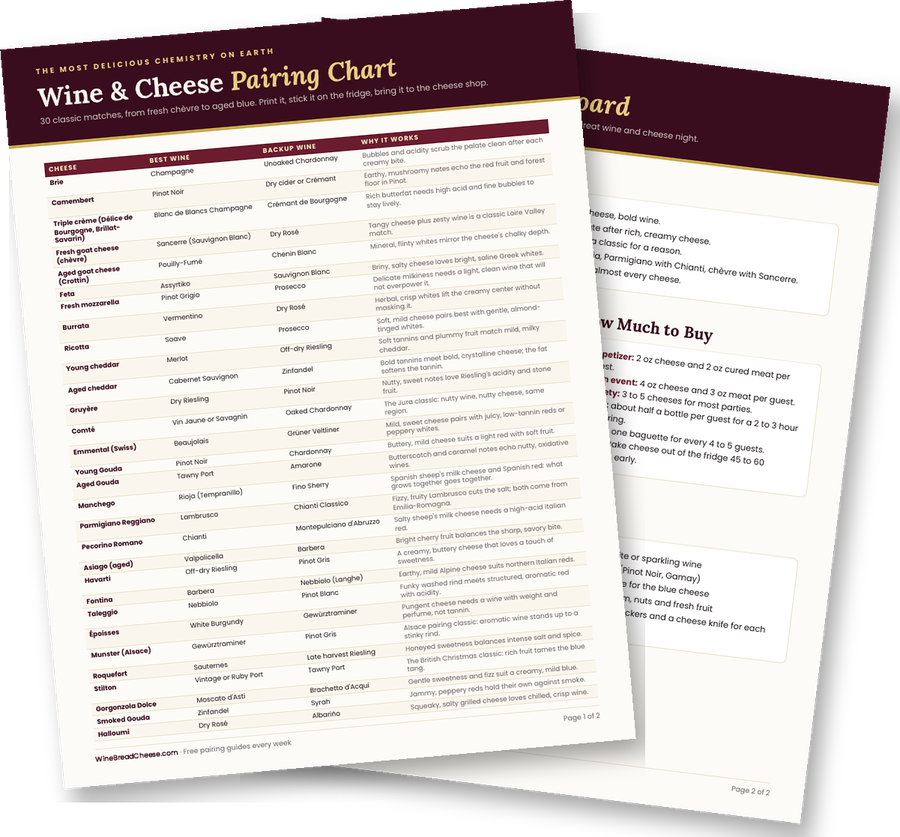
Quick Wine and Cheese Pairing Chart
- Brie or Camembert: Champagne, Chardonnay, Pinot Noir
- Fresh goat cheese: Sauvignon Blanc, Sancerre
- Aged Cheddar: Cabernet Sauvignon, Zinfandel, Malbec
- Gouda (aged): Merlot, Shiraz, tawny Port
- Gruyère or Comté: Chardonnay, dry Riesling, Pinot Noir
- Parmigiano Reggiano: Lambrusco, Chianti Classico, Barolo
- Manchego: Tempranillo, Garnacha, dry Sherry
- Stilton: Port
- Roquefort: Sauternes
- Feta: Assyrtiko, Sauvignon Blanc, dry rosé
Don’t Forget the Bread
Bread is the bridge between wine and cheese. A neutral baguette lets delicate cheeses shine, while a dark rye or walnut bread stands up to blue cheese and bold reds. See our guide to the best breads for a cheese board for full pairings.
How to Serve Wine and Cheese Like a Pro
- Take cheese out of the refrigerator 30 to 60 minutes before serving. Cold mutes flavor.
- Serve whites lightly chilled, not ice cold, and reds slightly below room temperature.
- Plan about 1 to 2 ounces of each cheese per person for a tasting, or 3 to 4 ounces total per person as an appetizer.
- Taste from mildest to strongest so the bold cheeses do not overwhelm the delicate ones.
- Store leftovers properly so nothing goes to waste. Our cheese storage guide explains how.
Frequently Asked Questions
What is the best all purpose wine for a cheese board?
Dry sparkling wine such as Champagne, Crémant, or Cava is the most versatile choice. Its acidity and bubbles work with soft, hard, and many blue cheeses. A dry Riesling is a close second.
Is red or white wine better with cheese?
White wine pairs with a wider range of cheeses because its acidity matches the tang of cheese and it has no tannin. Red wine works best with hard, aged cheeses like Cheddar, Parmigiano Reggiano, and aged Gouda.
What wine goes with sharp Cheddar?
Sharp, aged Cheddar pairs well with full bodied reds such as Cabernet Sauvignon, Zinfandel, and Malbec. For a classic British match, try it with tawny Port.
Which cheese goes with Pinot Noir?
Pinot Noir pairs well with Gruyère, Comté, Brie, mild washed rind cheeses, and young Gouda. Its light tannin and bright acidity make it one of the most cheese friendly reds. Read more in our Pinot Noir pairing guide.
How many cheeses should I serve with wine?
Three to five cheeses is ideal. Choose a mix of textures and milk types, such as one soft, one semi firm, one hard, and one blue, and plan one or two wines that cover the range.